
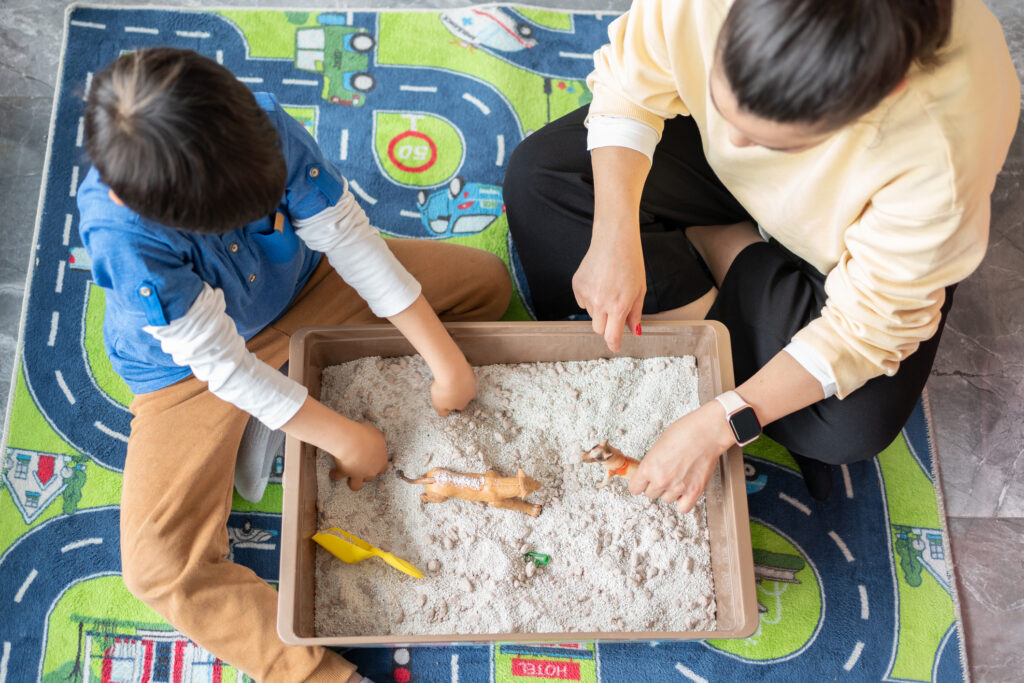
Does your child become overwhelmed by bright lights or startled by sudden sounds? Or do they seem to crave constant motion and stimulation? These behaviors are often signs of sensory processing challenges.
Understanding how sensory processing impacts your child’s daily experiences can help you provide the right support so they feel safe, in control, and able to fully engage with the world.
What Is Sensory Processing?
Sensory processing refers to how your child’s brain receives, organizes, and responds to information from their environment. This includes input from touch, sound, sight, taste, movement, and body awareness.
When this system works smoothly, your child can navigate their environment with ease. They can move from one activity to another without feeling overwhelmed, focus on a school assignment despite background noise, and participate in family meals or playdates feeling balanced and at ease.
However, sometimes a child’s senses over-react or under-react to information from their environment. This can create sensory processing challenges that affect everything from their ability to focus and behave to how they interact with peers and manage daily routines.
Understanding Sensory Processing Challenges
Sensory processing challenges are often grouped into two general patterns, though it’s common for a child to experience a mix of both:
- Sensory-avoiding: Your child may be highly sensitive to sensory input and try to avoid or escape it. They might cover their ears at everyday sounds, refuse certain clothing textures, or prefer quiet, dimly lit environments.
- Sensory-seeking: Your child may need more sensory input to feel alert or at ease. They may seek out movement, touch, or noise by jumping, spinning, crashing into objects, or constantly interacting with their surroundings.
How Sensory Challenges Impact Daily Life
When your child has difficulty processing sensory input from their environment, it can directly impact how comfortably they experience daily life. These differences aren’t just preferences; they shape how your child functions every single day. Sensory challenges may impact your child’s daily life in the following ways:
- Struggling with daily routines: Tasks like getting dressed for school or brushing teeth can become emotional hurdles due to sensitivities to seams, tags, or textures
- Finding school challenging: A humming air conditioner or bright classroom lights can be so distracting that it is hard for your child to sit still or follow a teacher’s directions
- Hesitating in social settings: Busy birthday parties or noisy playgrounds may feel overwhelming, causing your child to withdraw from friends or avoid group play
- Experiencing emotional exhaustion: When the world feels “too loud,” your child may have strong emotional reactions, like frequent tears or frustration, because their system is overloaded
- Affecting self-esteem: When everyday tasks feel unmanageable, a child may lose the confidence needed to try new things or join in with their peers
Common Signs of Sensory Processing Challenges
Sensory processing differences often appear in two main patterns, sensory-avoiding and sensory-seeking, and it’s common for a child to show signs of both:
Signs Sensory-Avoiding:
- Becoming anxious or irritable in crowded, busy environments
- Covering their ears to block out loud noises like vacuum cleaners or hand dryers
- Disliking specific clothing textures, seams, or tags
- Avoiding messy play, such as finger painting or sand play
- Preferring dimly lit, quiet environments
Signs Sensory-Seeking:
- Needing constant motion through spinning, jumping, or crashing into objects
- Having trouble sitting still during meals or classroom activities
- Craving firm, steady pressure, such as tight hugs or being wrapped in a blanket
- Making loud noises or needing to touch objects or people constantly as they move through a room
Supporting Your Child’s Sensory Processing at Home
Small, intentional adjustments to your home routines can help your child feel calmer and more secure.
For Sensory-Avoiding Children:
- Give them a quiet, dimly lit space with noise-canceling headphones or soft pillows to go to when they feel overwhelmed
- Remove itchy clothing tags and give them seamless socks to wear
- Introduce new food textures or smells gradually to reduce pressure and build trust
For Sensory-Seeking Children:
- Encourage “heavy work” activities, such as pushing a laundry basket or carrying groceries, to help your child feel grounded and steady
- Allow frequent movement breaks during homework so your child can release energy and better focus
- Provide weighted blankets or firm “bear hugs” to offer the deep pressure your child needs to feel at ease
How Occupational Therapy Helps with Sensory Processing
When sensory challenges make it hard for your child to fully enjoy everyday life, a pediatric occupational therapist can help. With targeted, play-based therapy, your child can learn how to better manage sensory input, build confidence, and participate more fully in daily life.
An occupational therapist may support your child by:
- Developing a custom, play-based therapy plan that targets your child’s unique needs.
- Using a professional sensory gym to help your child improve balance, body awareness, and strength so they feel more confident and in control of their bodies.
- Introducing sensory input like textures, light, and sounds gradually in a controlled environment so your child feels safe and supported as they become more comfortable.
- Helping your child learn to recognize signs of overwhelm so they know when to use techniques like deep breathing to manage their own needs.
- Sharing tips with parents and caregivers so your child can continue to make progress at home between therapy sessions.
After consistent practice at home and in therapy, your child can learn how to manage new or uncomfortable sensations more easily and engage with the world in a way that feels comfortable and manageable.
Reach Out to Little Hands at Play Therapy for Support
If your child is experiencing sensory challenges and you are in the Fort Smith or Fayetteville, AR, areas, the therapists at Little Hands at Play Therapy can help. Call us at (479) 226-3409 or fill out our online contact form to schedule an evaluation. We look forward to helping your child feel safe, confident, and ready to explore the world with curiosity and joy.
